
Current Sensor ICs
High-Precision Linear Current Sensor IC with 200µΩ Conductor and Integrated Protection
ACS780
Markets Served
This part is in production and has been determined to be NOT FOR NEW DESIGN. Please refer to ACS37220 for new designs.
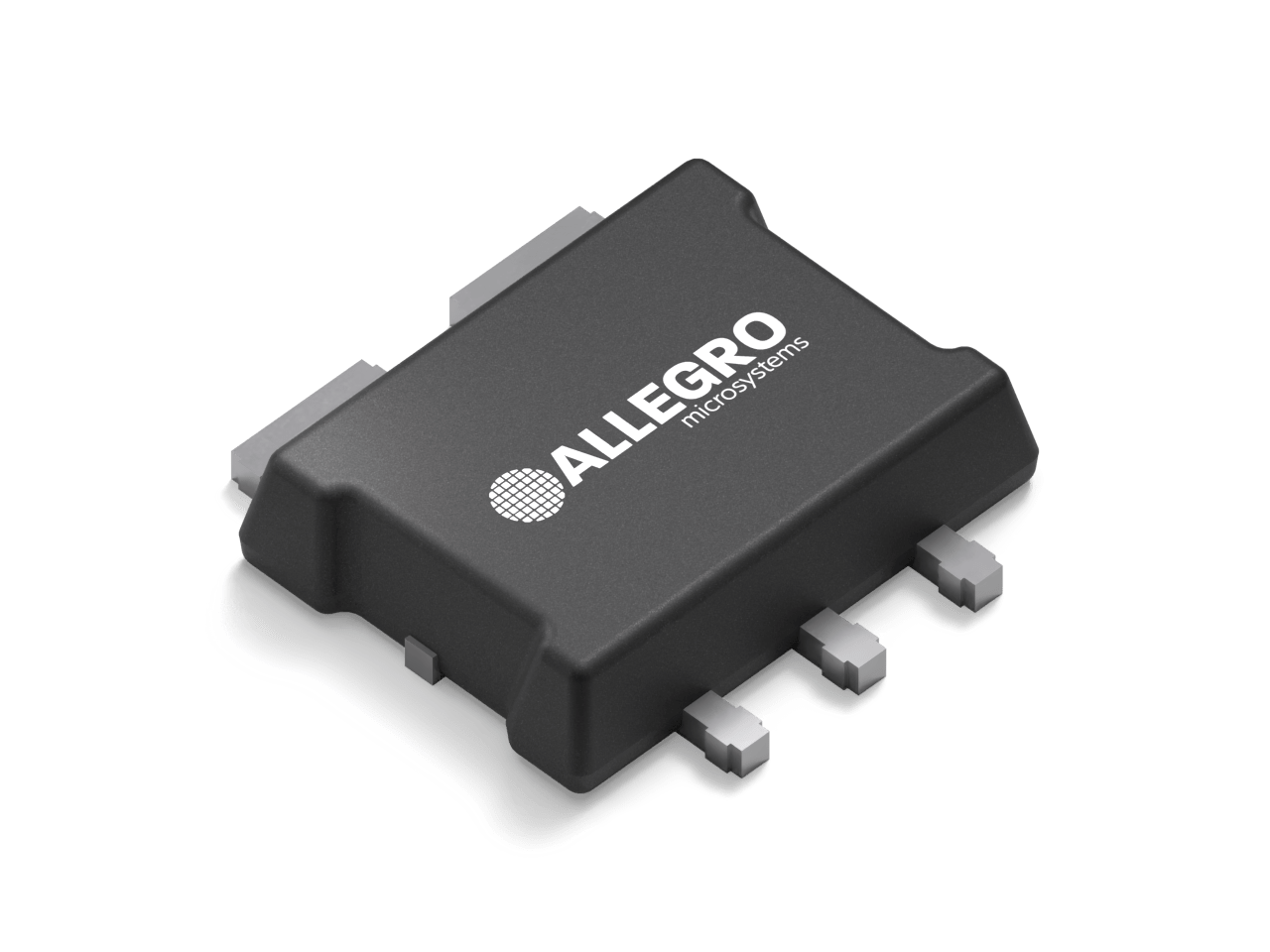
The ACS780 offers accurate and efficient current sensing for automotive applications, featuring a coreless design, 200µΩ conductor for low power loss, and integrated protection against common-mode field interference.
Product Details
Product Details
Top Features
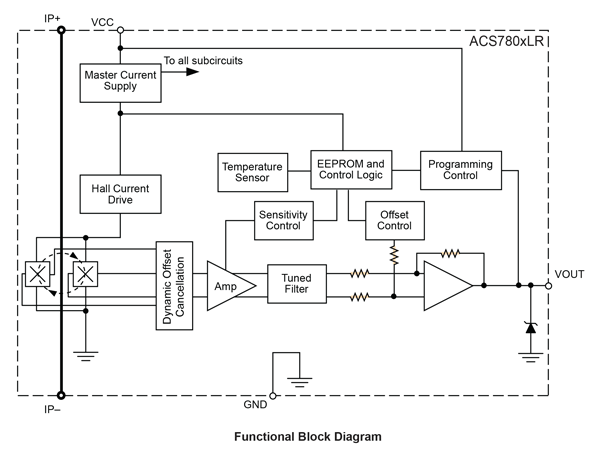
- Core-less, micro-sized, 100 A continuous current package
- Ultra-low power loss: 200 μΩ internal conductor resistance
- Immunity to common-mode field interference
- Greatly improved total output error through digitally programmed and compensated gain and offset over the full operating temperature range
- Industry-leading noise performance through proprietary amplifier and filter design techniques
- Integrated shield greatly reduces capacitive coupling from current conductor to die due to high dV/dt signals, and prevents offset drift in high-side, high-voltage applications
- Monolithic Hall IC for high reliability
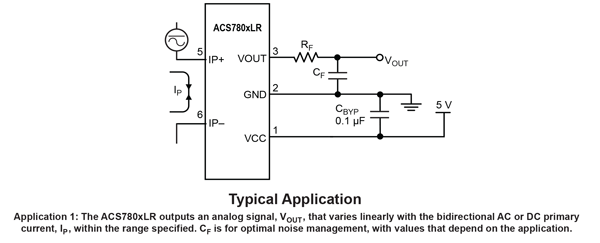
- 4.5 to 5.5 V, single supply operation
- 120 kHz typical bandwidth
- 3.6 μs output rise time in response to step input current
- Output voltage proportional to AC or DC currents
- Factory-trimmed for accuracy
- Extremely stable quiescent output voltage
- AEC-Q100 automotive qualification
Part Number Specifications and Availability
ACS780 Product Overview
Allegro's family of fully integrated current sensor linear ICs in a core-less package designed to sense AC and DC currents up to 100 A. Allegro’s ACS780/ACS781 are provided in this new automotive-grade, low-profile (1.5 mm thick) sensor IC package that represents the highest current density of any Allegro current sensor IC package to date.
0:00

Technical Documentation

Application Note
Secrets of Measuring Currents Above 50 Amps
Application Note
Glossary of Isolation-Related Terms for Integrated Current Sensors
Application Note
Techniques to Minimize Common-Mode Field Interference When Using Allegro Current Sensor ICs (ACS724 and ACS780)
Application Note
How to Analyze and Compare Allegro Current Sensor and ADC Error Components
Application Note